Monday, October 6, 2014

Columbia Gorge & Mt. Hood - Senior backpacker at the wheel (5)

 This was actually my first one day
drive since I came to US 3 days ago on Aug. 29. I planned to make a round tour from Portland through Columbia Gorge, Hood River, Lake Mirror, and back to Portland. I thought this would be also a nice test driving to confirm that I was ready for safe driving in US where people drive on the wrong side of the roads. 


<Historic Columbia River Highway>
 Historic Columbia River Highway is a scenic highway along Columbia River in Oregon stretching from Troutdale to The Dallas. A guide book says that it was constructed between 1913 and 1922 not just as means of traveling by the then popular Ford Model T, but designed with an elegance that took full advantage of all the natural beauty along the route. Nowadays this old two-lane road runs in parallel with the modern Interstate 84. While in Japan, I checked my portable US Garmin GPS navi in simulation mode to see if it would correctly choose this scenic road instead of I-84 to go to Hood river from Portland. But this intelligent machine chose I-84 without hesitation, which forced me to input two more extra addresses on this particular road for Crown Point Vistas and Multnomah Falls.


 I departed the Northwest Portland Guesthouse at 8 am and after filling up at a service station, headed for Crown Point Vistas, one of the most scenic points on this historic road. This site stands 223 m above the river and I could enjoy a magnificent view of the Columbia Gorge from the lookout of this Vista House. From here to Hood River, it was really awesome to drive on this old winding mountain road with a magnificent view of the Columbia River spread out beneath my eyes, sometimes stopping at falls like Multnomah Falls, the highest in the area. 


<Hood River Fruit Loop>
 After lunch at Hood River, I turned to the Hwy 35 at the Exit 64 of I-84 heading south for Government Camp on the southern slope of Mt.Hood. I drove through the Hood River valley, a farming community famous for its varieties of fruits and wine. Along the route just before reaching to Tamanawas Falls Trailhead, I found a fruit stand lively with some visitors and parked by the near roadside. They were offering peaches, nectarines, plums, and apples in a country style of store surrounded by the lovely colored flowers garden. How sweet their peaches were! In the brochure I got at Hood River visitor center, more than 30 of local farm stands were mapped on the Fruit Loop.  


<Mt. Hood>
 Passing through the Fruit Loop on Hwy 35, Mt. Hood was beginning to appear in the westward. This is the highest mountain in Oregon with the height of 3,427 meters above the sea level, especially popular as a ski resort through all seasons.    


<Mirror Lake>
Oregon Route 35 merges onto U.S.26 toward Portland a few miles east of Government Camp on the southern slope of Mt. Hood. I found the Mirror Lake Trailhead 1 mile away from  Government Camp. It was nearly 3 pm and although I was anxious to return to my hotel in Portland before dark, I started to walk across the small wooden bridge to make my way to the lake. This loop trail hiking is loved by people of all generation in Portland and I met many young couples, families with their kids and senior groups on the trail and enjoyed saying hello to them when we passed each other. Unfortunately it became cloudy when I reached to the lake, so I could not admire this great Mt. Hood standing in the north side from the loop. But it was a nice and refreshing two hours' hiking.


I drove through Rhododendron and Gresham on the route 26 and came back to the Northwest Portland Guesthouse before 6 pm. It was a gorgeous round tour with 9 hours of scenic driving, hiking, and delicious fresh lunch at a Hood River's cafe lounge, which also gave me more confidence in driving on U.S. roads for the week ahead.           

(to be continued; next back to Portland)

Tuesday, September 30, 2014

Depoi Bay on Oregon Coast - Senior backpacker at the wheel (4)

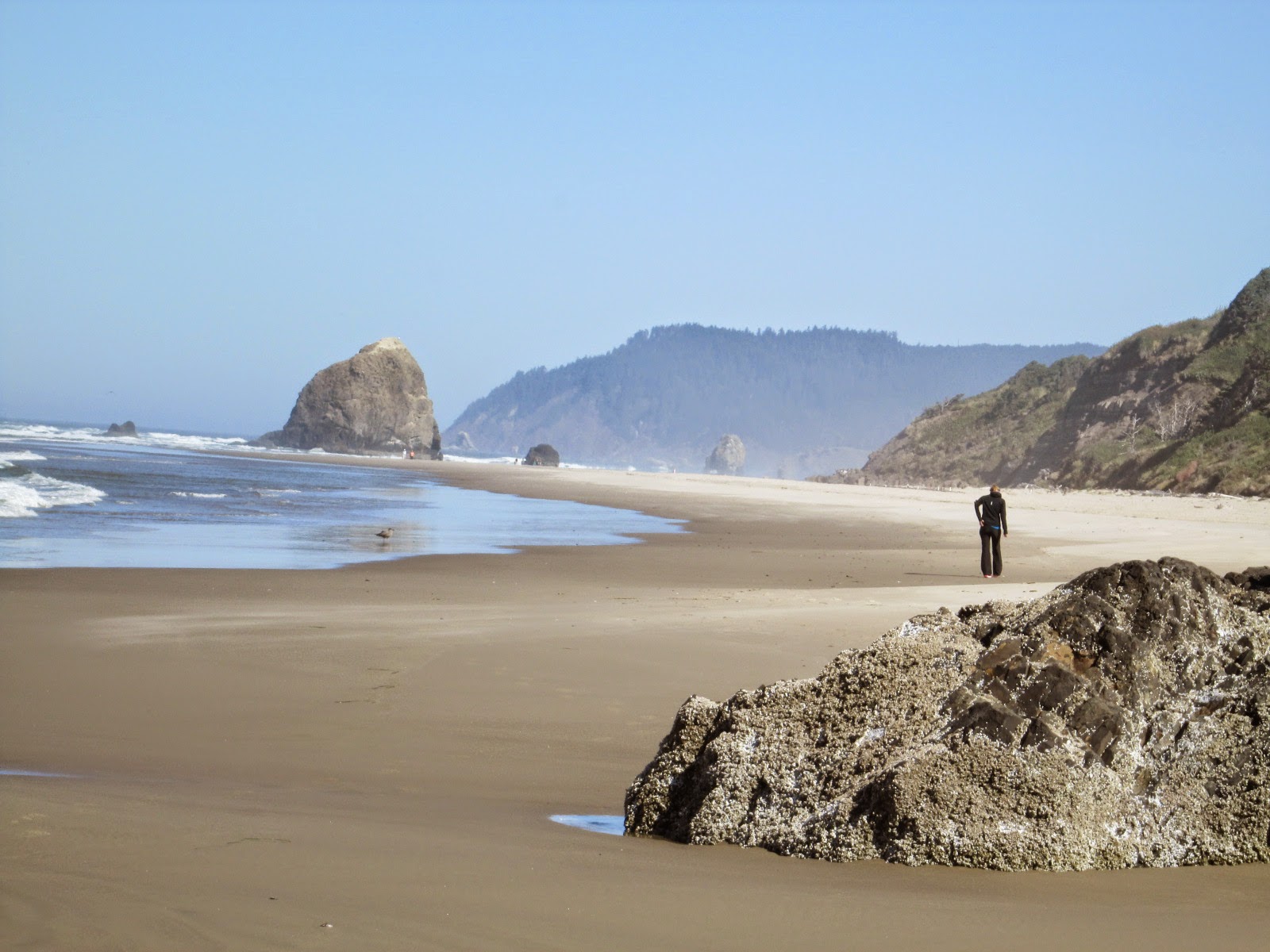
 I drove from Astoria south to Newport on U.S. Route 101 along the coastline near the Pacific Ocean. On the way I dropped at Arcadia Beach exploring the white sandy ocean beach and enjoyed an endless ocean view from Winema Wayfinding Point. I was enchanted by the incredible scenic beauty of Oregon coast under the blue sky.


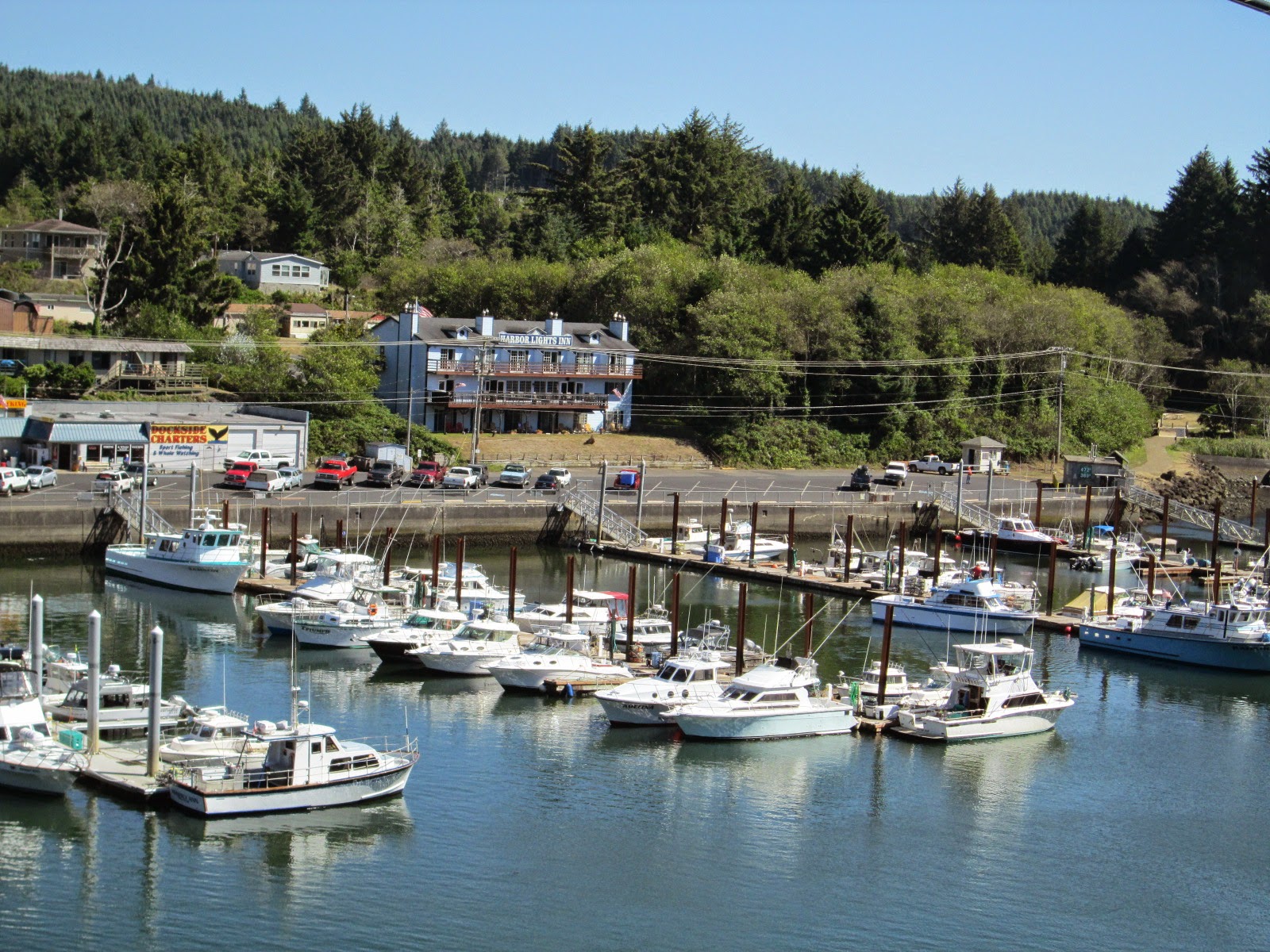
 Arriving at Depoi Bay, 121 miles south from Astoria, at 2 pm, I looked for a chartered boat to watch Gray whales near the shore. Dubbed as the "Whale Watching Capital of the Oregon Coast", Depoe Bay with The Whale Watching Center is a good spot for tourists to locate and watch whales almost year around as they blow, dive and breach.


  Gray whales migrate past the Oregon coast twice a year. From the last week of December to the first week of January, they are heading south from Alaska to warm water lagoons off northern Mexico, while in spring time beginning the last week of March through June, they are heading north back to Alaska. 

 But even in summer and fall off, we still have a chance to see Gray whales. Because some of them do not migrate all the way north to Alaska and spend from late June through October off the coast of Oregon. They are called as resident whales and number about 200. About 40 of these hang out off the Depoi Bay, spending much of their time feeding on shrimps.

 There were three whale watching chartered companies here, but none of these was going to sail a boat out this afternoon due to strong wind. I decided to make a reservation for tomorrow’s 8 pm zodiac, a small boat with a maximum of 6 passengers on board, operated by the Dockside Charters.
Next morning when I came to the dock harbor, I found that I was a only passenger for them. With life vest on, my captain took me out into the Pacific Oceans on the zodiac boat, which pitched and rolled heavily so that I found it not easy to hold my camera tightly focusing on whales moving.    


 In order to take good shots of Gray whales's dynamic moves like the blow, the breach and the dive, we need to know their swimming pattern. They often stay under water for 3 to 5 minutes when they are eating. If they have been down for 5 minutes, they usually blow 5 times at regular intervals of 45 seconds when they surface to replenish their oxygen supply. I was always puzzled as to where they would appear, and then suddenly hearing my captain's shouting, turned around toward the direction where he pointed and tried to take a shot of them in the next 45 seconds.


  Next time, I'd love to see a bunch of 18,000 gray whales migrate south from Alaska along the coastline of Oregon in December.

(to be continued; next to Columbia Gorge)

Tuesday, September 23, 2014

Astoria on Oregon coast - Senior backpacker at the wheel (3)

 From Paradise Inn, I headed for Astoria on the northern edge of Oregon coast, where the Columbia River flows into the Pacific ocean. In 1811, the first settlement was established here for fur trade, which marked the oldest record west of the Rockies. The town especially flourished in the wild salmon fishery, which lined the town streets with banks, wood-steepled churches and Victorian mansions. 
 I arrived at Norblad hotel and hostel before 2 pm, which was too early for me to check-in. So I went to the nearby waterfront and took a late lunch there with beef jerky and snacks enjoying a nice view of an anchoring cargo ship, seagulls and Astoria bridge over the mouth of the river.  


One of the pleasures for a traveler from Japan is to dine and taste local beer at a restaurant with microbrewery. Here as well as in Portland, I looked for such a restaurant or pub. Luckily there stood the Fort George Brewery & Public House just in front of tonight's accommodation. The pub's name with its ALE beer reminded me that Astoria was under control of the British authorities from 1813 to 1818 and it was known as Fort George


  Sitting on the bar counter, I was wondering which one I should start to pick up from their varieties of microbrewery beers on the board. Their 14 different crafts original beers bear all strange names like "Divinity", "Working Girl Porter", "Wasabi Ginger Ale", "3-way U.P.A." and etc. In Japan the four major beer companies dominate the market, and I feel sometimes their beers taste almost the same and rather boring. But here any beer looked like boasting of its uniqueness with fresh locally obtainable ingredients, which quenched my thirst tenderly.


  I liked Astoria, a quite and small town, which made me feel some nostalgia with its flavor of history. On the next morning before departure, I walked around looking for a cafe shop near the Norblad together with a young hosteler. She was also coming to Astoria alone from Portland for sightseeing.  

(to be continued; next to Depoi Bay on Oregon Coast)

Friday, September 12, 2014

Mt. Rainier - Senior backpacker at the wheel (2)

 The national park of Mt. Rainier is located in Washington State at a distance of about 200 km north from Portland, Oregon. I departed Northwest Portland Guesthouse, Hostelling International, at 8:00 and after filling up at a service station, took ramp left for I-5 toward Seattle, heading for Paradise Inn, where I made a reservation for two nights stay for hiking.


 Mt. Rainier stands 4,392 m, 14,410 ft, above sea level, highest in Washington state with 25 named glaciers across 9 major watersheds and subalpine wildflower meadows ringing this icy volcanoParadise Inn is located at the height of 1642 m, the highest mountain lodge of this area with its name derived from its frontier James Longmire’s daughter-in-law’s remark at her first sight, “Oh what a  Paradise". 


 From the lodge, there are several hiking trails. Before climbing I had consulted with a information centers’ young lady about the possible routes, but I changed occasionally the course while hiking so that I covered finally three different trails; Deadhorse Creek Trail, Skyline Trail, and Lakes Trail, all which required me total 9 hours, taking many photos of subalpine wildflowers. I had been almost all alone with so few hikers I met on the way and it looked like I’m only one guy hosted by these beautiful wildflowers, singing to myself the old 1960s hit song of "King of the Road".

<Deadhorse Creek Tr.>
  It was misty with morning drizzling rain when I departed the inn at 8 am. The trail was clearly guided with sign posts at major branch points and subalpine wildflowers like lupine or Lewis’ monkeyflower lined up along the trails. About a half hour after I started to follow the trail, a mother wild deer with her baby suddenly appeared ahead of me. They were grazing grass, trying to ignore me but very cautious when I tried to take photos of them.   


 With an hour walking, I reached to Glacier Vista, 6336 ft, a relatively broad open area, from which one could have a closer view of the Nisqually Glacier on a fine day. 


 <Pebble Creek>
 Before heading up to Panorama point, I made my way along the path to Pebble Creek which lead to Muir Snowfields. After a half mile ascending I found the sign board which said something like “Dangerous zone from this point to Muir Snowfield. Even experienced climbers could have died.” I advanced 10 minutes further and found the trail merged onto the snowfield, which made me decide to return to Panorama Point.


<Panorama Point to Sluiskin Falls>

Panorama Point
On a clear day, I could have seen from this point Mt. Adams 45 miles to the south, Mt. St. Helens 46 miles to the southwest, and Mt. Hood 96 miles away in Oregon. From this view point I followed the trail further upward to reach the today’s highest point 7000 ft. and then descended gradually to the cross point between the Golden Gate trail and the Skyline trail. I changed again my original plan and took the Skyline to Sluiskin Falls. 


As gradually the weather became sunny, the subalpine wildflowers meadows appeared before me. How happy I am!


 < Lakes Trail to Reflection Lake >
 Following the skyline trail about half mile, I met a senior couple and following their advise, I  turned left to make my way along the Lakes trail, giving up the idea of returning to the inn along the skyline trail having a late lunch. I saw many small lakes, flowers, and forests on an up-and-down walk.


On a clear day I could expect to see Mt. Rainier’s image reflected in the surface of Reflection Lake, but it became darker and started to rain fiercely as I approached the lake, so I had no privilege to see the great image of this holy mountain. 


(to be continued; next to Oregon Coast)

Wednesday, September 10, 2014

Senior backpacker at the wheel on Oregon roads

I got a driver’s license 10 years ago at the age of 54. Since then, driving on US highways to visit national parks for hiking has become one of my dreams. In Japan we don’t need so much a car to access to entrances for mountain hiking, but things are different in US. I don’t rely on a tourist company's packaged tours. My traveling style is just like backpackers’, so I like to go as wind blows like a wanderer and do what I feel good at that time.

 The issue was driving on US roads. My annual driving miles in Japan average less than 3,000 miles and I have had no experience in using rent-a-car even in Japan. Not only inexperience in driving, but also I need to consider my physical handicaps like allergic eyes and disabled right hand due to polio with which I was struck at five. 
How I can manage to drive safely and be ensured to reach my destinations as scheduled?
I have planned routes carefully since one year ago and bought a US Garmin's portable navi, which I tested for Japanese roads and set up all possible addresses and routes into it. 
And on arrival at Portland, Aug. 29 Fri, 2014, I immediately rush into a AT&T shop to buy its prepaid phone, Nokia Lumia 635 mainly for security reason while driving.


 With all these precautions and bless of good weather, I really enjoyed my summer vacation and found driving on US roads a lot of fun as well as hiking in beautiful US National and natural parks. Let me present my nice memories here one by one;

  • Mt. Rainier 
  • Oregon Coasts
  • Columbia Gorge
  • Portland
(to be continued)

Friday, July 25, 2014

Tohoku's 2011 Summer after 3-11 disaster

 After 3-11 of the earthquake followed by tsunami and nuclear power plant disruption hit on Tohoku region, the northern part of Japan, very few travelers were seen to visit that region even in the central mountains 70 km east from the  Fukushima nuclear reactors and the deserted coastal area. It was my first long driving since I got a driver license seven years ago at age 54. I drove up to north alone for Fukushima onto the highway Jobando from my home at Kashiwa city on July 30, 2011.

<Mt. Adatara>

My first stop was Dake-onsen at the foot of
Mt. Adatara and there I was joined by my eldest son and his newly married wife. Although this place is a famous and popular hot springs among tourists, it was very quiet and not a few of the inns closed. On that night we had terrible earthquake with the magnitude of more than 5.0. People here have been threatened every week with sudden earthquakes since 3-11. In the early
morning under the drizzling rain we headed for the top of the Adatara and got wet to the skin. The weather was not nice, but anyway we were happy to be able to reach to the top and take the hot bath when returned to the foot.
I then said good-by to them and drove alone further up to north for Kurikoma Mountain of Miyagi, which has been recovering from the massive damages due to another great earthquake of the magnitude 7.2 hit in 2008.

<Mt. Kurikoma>

 I stayed at the cozy Japanese B&B "Magusamori" with beautiful wild flower garden for three days, while I enjoyed hiking to the top of Mt. Kurikoma or the nearby marsh and drove to see Hiraizumi, the world heritage site.

Mt. Kurikoma is 1,627m high from the sea level and located just at the central part of Tohoku region. On a clear day, the guide book says, you can have spectacular views from the top, of Mt. Gassann or Mt. Choukaisan in the west direction to the Japan Sea and Mt. Hayachine in the east direction to the Pacific ocean.


Mt. Kurikoma viewed from the Mrash                          At the top


On the way to the B&B “Magusa-mori” which was located at the upper half of Mt. Kurikoma, I found some of the roads blocked due to the Great East Earthquake of 3-11 and was forced to make a detour. After 3 days’ stay in “Magusa-mori”, on the night before my departure, the master of the inn told me the development history of the Kouei area of Kurikoma. The area was first cultivated in 1947 by the people who had barely escaped with their lives from Manchuria in China under the threat of Russian soldiers. Although breaking up the mountainous soil for cultivation was harsh, they have been struggling to produce their own unique products to earn their living with their pioneer spirit just as they did in Manchuria. They succeeded for the first time in Japan in breeding farm-raised Iwana, mountain trout and producing strawberry and Japanese radish, which benefit from its cooler climate and can sell pricier in the market during the warm season with no competitors from the more blessed plain lands.

In July 14, 2008, the region was hit by the Iwate-Miyagi Nairiku earthquake with the magnitude of 7.2 and the Kouei area of Kurikoma was devastated with massive landslides and roads blocked up. People had been evacuated from home and forced to live in temporary housing for long time. Another big disaster also hit the region in 3-11, 2011.

 The master of the B&B said that they have experienced not a few of severe natural disasters, but overcame. ‘Why we could successfully recovered each time? Because we have had a strong will to work harder for building better life by themselves. Even when they were forced to live in temporary housing, they could live together and were united so that they could help each other and exert their originality and ingenuity toward the severe natural conditions.

I thought that his remark also indicate some wisdom when we think of how the recovery from the Great East Earthquake of 3-11 should be made. The importance is not only on how much financial support we should provide to the people evacuated, but also on how much we can do for them to recover the region by themselves.

The 3 years after that, it's sad to hear the news that the excess of subsidies to the people evacuated from the devastated zone of Fukushima Dai-ichi nuclear reactors have made some of them to buy a luxury new car of Benz and indulge in drinking without working.  


Thursday, June 5, 2014

Nuclear power plants in Japan after 3-11, 2011

Fukui District Court ruling order

On May 21, the Fukui District Court banned Kansai Electric Power Co. to restart the No.3 and No.4 reactors of the Oi nuclear power plant in Fukui prefecture.  Currently there are 48 nuclear reactors in 17 nuclear power plants across Japan, but none of these are in operation three years after the Fukushima disaster. Although the Nuclear Regulation Authority is now in the process of inspecting 18 reactors that operators aim to reactivate at 11 nuclear plants, the Fukui District Court ruled that no safety measures could ever be sufficient, as it is impossible for modern science to predict the biggest possible earthquake that could strike.

 I wonder how the court judges without sufficient knowledge of science could ignore the ongoing inspection by the Nuclear Regulation Authority and rush to decide such ruling. When we saw the Sinkansen bullet train for the first time some 50 years ago, there were also some who criticized the new technology as a threat to Japanese society. And what about air planes when they first appeared? Mathematically there have been no human inventions with zero possibility of accidents. But our history shows that human beings have overcome such difficulties or minimized those risks involved to a tolerable level with the improvement of technology and human wisdom. With this in mind, I have examined the current situation facing us in Japan.

Japan’s Primary Energy Supply before & after Mar. 11, 2011

 So what are the issues? Let's take a look at the following ratios of power supply from the various resources, which I pick up from the report by The Federation of Electric Power Companies of Japan(*1).
                                                                                  Annual total
    Nuclear   Hydro   Renewables   Fossil Fuel   Generated Electricity
2010:  29%         9%       1%                62%              10,006 TWh
2012:   2%          8%       2%                88%               9,408
          -27%                                       +26%  

 Here "Fossil Fuel" includes Oil, Coal, and Natural Gas with the respective ratios of 8%, 25%, & 29% in 2010 and of 18%, 28%, & 42% in 2012. And "Renewables" represent the sum of Geothermal, Solar, and Wind power generation.  We can easily see that the nuclear power generation was exactly replaced by fossil fuels after The Great East Japan Earthquake hit in March 11, 2011. 
  We also keep in mind that Japan’s dependence on imported energy  sources is extremely high with 96% in 2010 if Nuclear energy is excluded from domestic energy. Thus this leads to ;

Japan’s trade balance in 22 consecutive months of loss

On May 21 Nikkei, the Japanese leading newspaper, reported that Japan’s trade deficit reached to 808.8 billion yen in April in the 22nd month of loss in a row, where the trade deficit with the Middle East accounted for 1002.9 billion yen  mainly due to the import of fossil energy resources.

This situation is not sustainable. We need to stop this continuing loss as soon as possible, or Japan with no natural resources could not survive in the competitive world economy, which might force our children's generation to escape from their homeland for seeking a job in abroad. This would cause some of our land as devastated as the disaster did.

Renewable energy

 Could renewable energy like solar, wind, geothermal or their combinations be an alternative to fossil fuels in power generation?

There are pros & cons with those types of new energy, but the most crucial points are;

  • Significantly Higher Costs
  • Fluctuated and unreliable power supply
  • Limited Capacity
It's OK to promote further the use of these renewable energy from the current less than few percents, but it has become apparent that they can not be an alternative to fossil fuel due to their much higher cost and unstable nature of power supply.

 My point is that the energy issues should be discussed from the various perspectives including safety, costs, human heath, global warming, and reliability. But the Fukui court went too far in their abilities and provided us with no insight to dig into these problems. It's not so simple.